
Aerial Hoops 101
What they are, why people love them and how to get started
What is an Aerial Hoop?
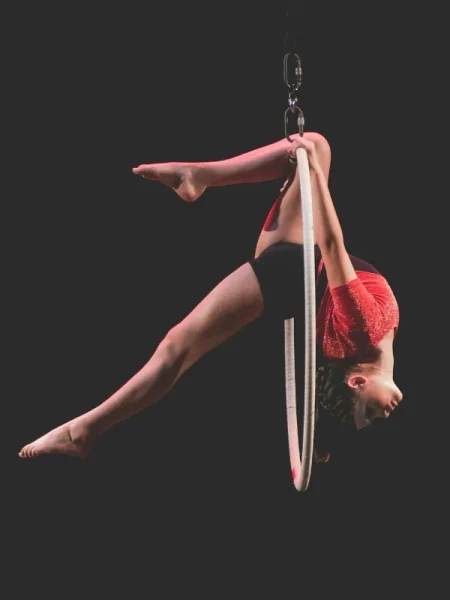
Picture a hula hoop. Now imagine it’s made of steel and suspended in the air. Whilst it is hanging down people can hang, spin, pose and flip inside it and off it. That’s an aerial hoop!
Also called a lyra, the aerial hoop is a circular steel apparatus used in circus arts and aerial fitness. It hangs from the ceiling – it can be either static or spinning – and acts like your personal floating stage. Some people climb and pose, others flip and swing. It’s a form of dance, it uses a lot of strength, it’s fun (but does hurt a bit). And no, you don’t need to be a contortionist or natural acrobat to try it.
Who Can Use an Aerial Hoop?
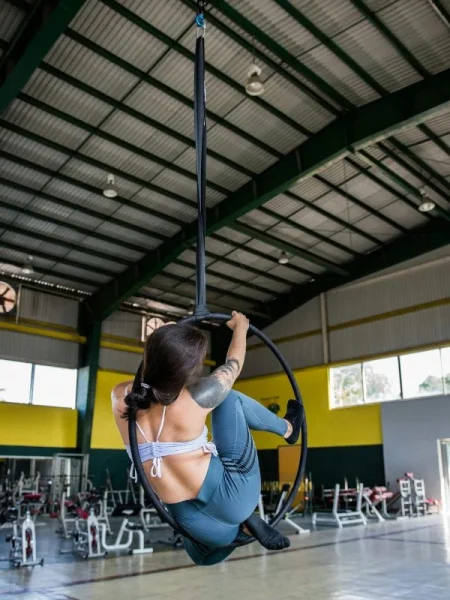
You might be surprised! Aerial hoops have made their way out of the circus and into studios, gyms, circus schools and even into homes by way of backyard rigs.
And age I hear you ask? Honestly, that’s just a number here. Teenagers, 30-somethings, people over 50. If you can reach the hoop (or climb a block to get in), you can give it a go.
Performers
Dancers, theater artists, aerialists… anyone who wants to add height and drama to their movement. Learning the lyra is a beautiful artform.
Fitness Folks
This is strength training with flair! It works the core, arms, and back whilst also helping with coordination and confidence.
Beginners
New aerialists that are looking for something fun but that will also challenge them.
Mums and Dads
Many parents try the aerial hoop after watching their children learn at circus school. You’d be surprised how healing it feels to hang upside down after a stressful day.
Aerial Hoop Features
At first glance, aerial hoops all kind of look the same. But the small details matter, especially once you’re hanging mid-air and realize your toes barely graze the bottom. Here’s the rundown:
1. Diameter
This is all about your torso length. The hoop size should match your body so that when you sit in it your head isn’t smooshed against the top bar… or worse, your knees are awkwardly poking out the bottom.
Most people use hoops between 85cm to 100cm (external diameter). Studios usually have a few to test out. As a rough guide:
– If you’re petite, go smaller
– If you’re taller or more flexible, go slightly bigger
– And if you’re not sure? Ask your instructor to measure your torso from your hip to the tip top of your head while seated – this will give you your magic number.
2. Tab Style
This is where things get a little nerdy (our specialty!). Tabs are the attachment points for rigging.
– Single-tab hoops hang from one point. They swing, they spin, they rotate more freely – this is great for flowy routines.
– Double-tab hoops are more stable. They hang from two points and give you symmetry, which is great for learning.
Each style offers different movement possibilities. Beginners often start with double-tab hoops for control. As your confidence grows, you will find that so too does your curiosity to try the wobbly, spinny chaos of a single-tab.
3. Padding & Grip
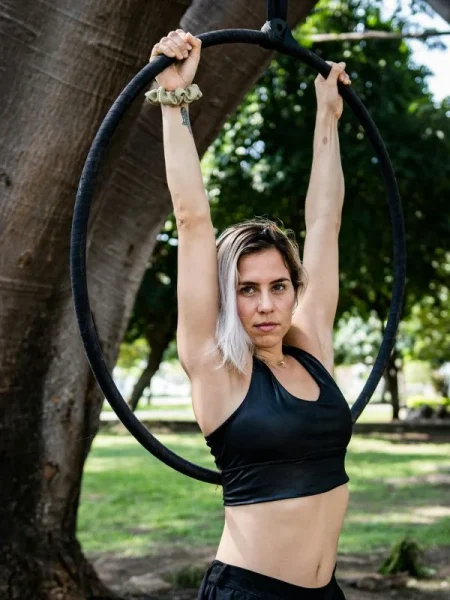
Bare steel isn’t exactly cozy unfortunately. Most hoops are taped with grip tape (like what you can find on a tennis racket or pole). It makes the hoop easier to hold, especially when you’re sweating a lot. Some people wrap their own hoop in cotton tape or even hockey grip.
Occasionally, you’ll see a padded hoop – that’s more of a comfort thing, especially during long poses or spinning rehearsals. But take note, too much padding can make grip harder.
Rigging for Aerial Hoops
Let’s not skip this part. Falling is not part of our plan.
The hoop doesn’t just magically float. It’s rigged from a ceiling point using carabiners, swivels (for spinning), slings or spansets and a secure anchor – often a beam or professionally-installed rig. Check out Aerial Rigging 101 for more information.
Studios should have this covered and inspected. If you’re thinking of setting up at home, be careful. Super careful. Don’t just hang a hoop from your apartment ceiling.
There are freestanding rigs available which many home aerialists use for practice outdoors or in garages that have enough height. Remember to still always double-check your hardware and rigging setup before lifting off the ground. Safety shouldn’t ever be an afterthought.
What Do People Actually Do on an Aerial Hoop?
The short answer? A lot more than you would expect.
Aerial hoop combines strength training, dance, flexibility and problem-solving in one amazing, gravity-defying package. Every pose or trick has its own mechanics – and each builds off the last.
Over time, you’ll level up to learn rolls, transitions, spin control and dynamic combos that start to look like something out of a circus show. But it all starts with that first shaky mount and awkward pose. Don’t give up, everyone else started at the same point as you.
Common Beginner Moves:
Man in the Moon – Sit inside the hoop with your legs hanging through. It’s a classic and very pretty pose. Also, it can feel weirdly calming.
Amazon – One leg hooked in, the other extended dramatically. Feels like a power stance in mid-air.
Delilah – A reclined pose that’s part yoga, part Vogue magazine cover.
Hocks Hang – Hook the backs of your knees over the hoop and lean back. Feels wild and scary at first, but gets comfortable fast.
Front Balance – Lying belly-down across the top bar. It sounds tame except for the pain, but balancing here takes serious focus.
Does Aerial Hoop Hurt?
To be completely honest, yes… sometimes it does hurt.
The hoop is metal. Your body is not. That means bruises – especially on hips, knees and back – are part of the learning curve. You’ll build up a tolerance and start moving in ways that minimize pressure. But in the beginning, aerial hooping can feel a bit like hugging a cold steel tire.
Your hands will also feel it. Grip strength takes time to build. Your skin might get a little beaten up. Some people wear leggings and sleeves to help reduce friction; others go full warrior mode and train bare-skinned.
Eventually, your body adapts. The bruises fade. And you stop noticing the discomfort because you’re too busy thinking, “Wait—I’m actually doing this.”
Aerial Hoop Equipment
You don’t need a closet full of gear – just some essentials:
– Fitted clothing – Think leggings and a snug top. Loose stuff can get caught up.
– No zippers, no metal – You don’t want to scratch the hoop (or yourself).
– A good studio or instructor – Not optional. Technique and safety matter.
– Grippy tape on the hoop – Most studios will have this, but if you’re buying your own, add it.
– Patience and snacks – You’ll burn energy fast. Hydrate. Refuel. Repeat.
If you fall in love with aerial hooping, perhaps you can invest in your own hoop later. But first? Just find a class and show up.
Why People Love Using the Aerial Hoop and Why You Might Too
Because aerial hooping is not just exercise – it’s an expression.
Aerial hoop gives people a sense of power they didn’t know they had. Hanging mid-air, spinning slowly, finding stillness in a pose – it’s like discovering a different version of yourself. Stronger. Focused. Unexpectedly graceful. Beautiful.
It’s also a community. Studios are often tight-knit, filled with encouraging voices and clumsy laughter. Everyone remembers their first ugly mount or awkward spin. No one judges. That solidarity? It’s rare and real.
If aerial hoop keeps visiting your thoughts – or you’ve bookmarked “beginner lyra tricks” videos more times than you’ll admit – maybe it’s time. You don’t need to be ready. You just need to be curious. The rest? That comes with each climb, each pose, each moment your feet leave the ground and you remember that yes – your body can absolutely do this. And honestly? That moment never stops feeling amazing.
You could stick to the treadmill. Or you could float inside a hoop, arms wide, hair flying, music in the background – and feel like you’re doing something wildly, beautifully different. We all only live once.