
Aerial Straps 101
The raw, unfiltered version of aerial arts
What are Aerial Straps?
If you’ve ever watched a Cirque du Soleil show and found yourself holding your breath as someone spiraled effortlessly midair – you were probably watching someone perform on the aerial straps.
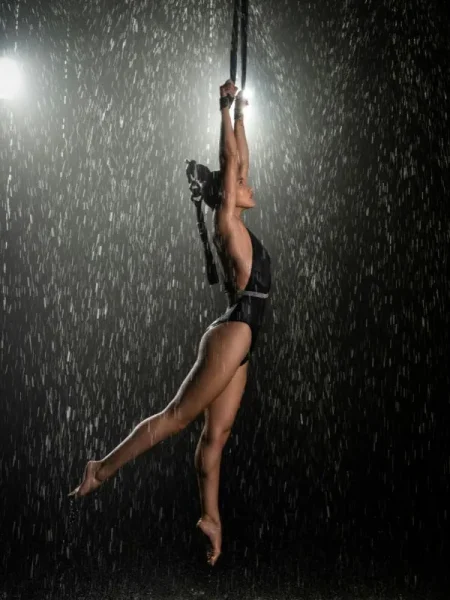
Aerial straps are two long bands (usually made of tightly woven cotton or nylon webbing) that hang from a rigging point. They look very simple – just loops and fabric – but don’t be fooled. These things are the raw, unfiltered version of aerial arts. They demand strength, precision, and control from their user.
But don’t be scared off too soon… you don’t need to be superhuman to start. You just need the willingness to show up and a little bit of grit.
Who Uses Aerial Straps?
The usual suspects? Yup, sure – circus performers, gymnasts, cross-trainers. But also? Climbers. Dancers. Yogis. People who couldn’t do a single pull-up before their first class. Some are looking for a challenge; others are there to reconnect with their bodies. There’s room for both.
You might be surprised by how many beginners come with no background at all. Zero gymnastics. No upper-body training. They just got curious one day and never looked back.
There’s something about the minimalism of it – the purity of movement, the balance of power and grace – that pulls people in. It is hard, there is no doubt about that… but hard in the way that makes you want to keep trying.
Features of Aerial Straps
At first glance, aerial straps can look… underwhelming. Two plain bands hanging from the ceiling? Really? But that’s where the magic lies.
1. The Material
Straps are usually 1.5 to 2 inches wide and made of strong, slightly grippy fabric – think seatbelt material, but more forgiving on the skin. They need to support someone’s full-body weight under force and do it reliably.
2. The Loops
One end of each strap usually has a loop – just big enough for a wrist or ankle. These loops are where the action begins. You’ll learn how to wrap your wrists, thread through, lock in. At first, it feels super awkward. Then – eventually – it starts to feel like second nature.
3. The Rigging
You’ll see aerial straps hung from secure ceiling points, portable rigs or trapeze-style setups in studios. Swivels are often used for the spinning work, carabiners for quick release and heavy-duty anchors to hold everything in place. The setup may look pretty basic, but the physics behind it are anything but.

What to Expect in a Beginner Aerial Straps Class
Let me paint the picture for you… you walk into a studio with bare feet and a little skepticism. You spot the straps and maybe – if we’re being completely honest – you wonder what you just signed up for and think about walking right back out of that studio.
Then class starts… oops, too late! Here’s how it typically goes:
– Warm Up – Expect lots of shoulder rolls, core activation, and mobility drills. Your joints need to be ready – this isn’t a “casual stretch” situation.
– Grip & Wrap Practice – Before anything fancy, you’ll learn how to actually use the straps. Wrist wraps. Elbow positions. Hanging shapes.
– Conditioning – Pull-ups, levers, skin-the-cats. It sounds intense but it will be scaled for beginners. No one expects superhero strength on day one.
– Basic Moves – Maybe you’ll try a wrist hang, or a meat hook (yes, that’s actually a real term), or just hold yourself steady for five seconds. Every small win counts.
– Cool Down – Shoulder and forearm stretches, breathwork, sometimes a good long sigh of “What did I just do?”
It’s humbling, but in the best way. The kind of work that makes you feel earned strength – not borrowed, not rushed.
Beginner Moves on Aerial Straps
Common Beginner Aerial Straps Moves:
Wrist Lock Hang – You wrap the strap around your wrist, lock it in, and hang. It builds grip and body awareness fast.
Meat Hook – One of those iconic, twisty hangs that looks like a sideways plank… midair.
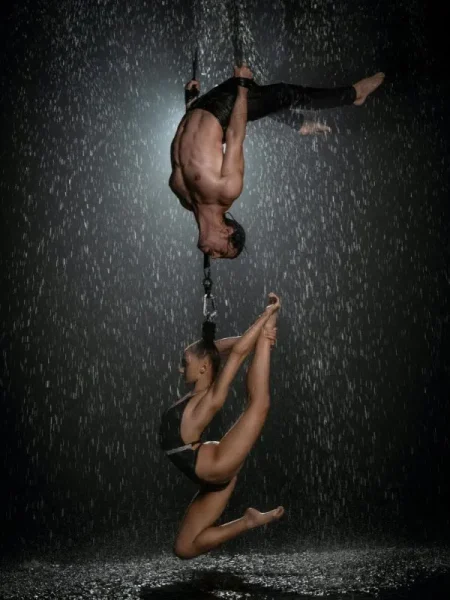
Inverts – Lifting your legs overhead while hanging to flip upside down. Basic, essential and surprisingly satisfying.
Straddle Ups – A controlled way to get your hips up and over into a pike or tuck shape.
Front Lever (the baby version) – A horizontal hold that starts with knees tucked. Pure core fire.
Don’t let the names scare you. They sound more intense than they are.
The challenge isn’t just doing the move – it’s doing the move with control. Straps don’t forgive wobbles. They ask for balance. That’s part of what makes progress feel so real.
Do Aerial Straps Hurt?
Short answer? Yeah… a little. The straps dig into your wrists, your elbows and even sometimes your armpits. You’ll bruise. Your hands might feel like you arm-wrestled a gorilla. But it’s a temporary hurt.
You’ll build calluses. Your body will adjust. And – here’s the really strange part – you’ll start to like the soreness. It means you’re working, showing up, holding more of yourself than you thought you could.
That said, proper technique really helps. So does listening to your body. Most injuries in the aerial arts space come from pushing past what your body’s telling you.
What Do You Wear When Using Aerial Straps?
Straps are fussy about fabric. What you wear can either help you or seriously hinder your progress.
Do Wear:
– Fitted athletic clothing (e.g. compression tops, leggings or unitards)
– Long sleeves or arm warmers (they help reduce friction and skin pinching)
– Avoid zippers or hardware that can get caught or dig in
– Hair ties. If your hair is long, tie it back securely. You don’t want it wrapped around the straps. Trust me on this.
Don’t Wear:
Loose clothing – it will slide or tangle
Jewelry of any kind
Lotioned hands (you will regret it)
Do I Need Strength Before Starting Aerial Straps?
Nope. That’s the whole point of training. You don’t have to walk in strong. You get strong by doing it.
Most beginners can’t do a full pull-up or hold a hang for more than a few seconds. That’s normal. The thing about straps is that they build strength while teaching you how to use it. You don’t just train harder – you train smarter.
You’ll discover muscles you didn’t know existed (hello lats). You’ll start walking differently. Standing taller. Using your shoulders more intentionally. Even your grip strength will improve doing everyday things – like opening a stubborn jar or carrying groceries with one hand like a boss.
Why People Love Using the Aerial Hoop and Why You Might Too
It’s raw. It’s stripped down. There’s no fluff – just you, gravity and two lengths of fabric asking, “How badly do you want this?”
It can feel strangely meditative too. When you’re hanging midair, every muscle engaged, breathing through the burn – there’s a strange kind of calm. Like your body is talking to your brain and both are finally listening.
Some days you’ll feel strong. Other days you’ll feel like spaghetti. But every session teaches you something – about balance, about effort, about patience. And when you finally hit a clean inversion, or hold a lever for five seconds longer than last week? That feeling sticks with you.
If you’re feeling intimidated, that’s normal. Aerial straps look impossible because they kind of are – until they’re not.
No one expects you to flip or hang like a pro on day one. What matters is showing up and letting your body learn. Bit by bit. Hang by hang.
And you know what? There’s something quietly powerful about doing something hard—on purpose—just to see if you can.
So maybe give it a try. Wrap in, hang on, and see where it takes you. It might just surprise you.