
Aerial Trapeze 101
Swing, hang, fly. Let’s look at the basics of aerial trapeze
What is Aerial Trapeze?
Let’s get one thing out of the way: trapeze is not just for circus performers in sparkly leotards flying across giant tents.
Aerial trapeze is a form of aerial acrobatics that uses a horizontal bar suspended by ropes. Sometimes it swings. Sometimes it stays still. Sometimes people flip over it like it’s nothing. And sometimes they just hang upside down in total control while the rest of us gasp.
The Different Types of Aerial Trapeze
There are two main types of aerial trapeze:
Static Trapeze – The bar doesn’t swing (much). The focus is on poses, balances and transitions.
Flying Trapeze – Yes, this is the “let go and catch someone mid-air” type. This type of aerial trapeze is a whole other level. Most beginners start with static trapeze.
Whether you’re here for fitness, fun or maybe just a bucket list checkmark, aerial trapeze can meet you where you are – and then nudge you a bit higher.
Who Becomes an Aerial Trapeze Artist?
You might be surprised. It’s not just performers and ex-gymnasts. The community is broad, welcoming and – this part is very important – much more diverse than people expect it to be.
Complete beginners – Many people show up having never touched a trapeze before. No fancy background, no particular skills in gymnastics or other aerial endeavors… just curiosity (or they may have watched the movie, The Greatest Showman and felt inspired).
Fitness seekers – Want a workout that doesn’t feel like a chore? Trapeze builds upper body, core, grip strength – and burns serious calories.
Performers – Dancers, actors and circus artists often use the aerial trapeze to build stage presence and dynamic movement.
People healing – Believe it or not, some find it meditative. There’s something about swinging, hanging and holding yourself up that clears the mind.
It’s also intergenerational. Teens can train alongside retirees or mums and dads. There’s space for intensity and gentleness, strength and also play.
Aerial Trapeze Equipment
Let’s break it down. The trapeze might look simple, but there is some real thought behind the setup.
The Bar
The trapeze bar is usually made of steel or aluminum and is about 60 cm wide (roughly shoulder width for most adults). It needs to be strong enough to hold dynamic movement – pins, hangs, drops.
Some bars are taped for grip, while others are left bare. This is really a personal preference thing. Tape will provide extra traction however it can also irritate the skin during long hangs.
The Ropes
Aerial trapeze hanging ropes are made from thick, sturdy cotton or synthetic materials. A rope is attached to each side of the trapeze bar. They hang vertically and attach to rigging hardware at the top – either at a fixed point or onto something that swings.
Fun fact: You can also use the ropes themselves for trapeze tricks. Twists, climbs, shoulder hangs – those ropes aren’t just for decoration.

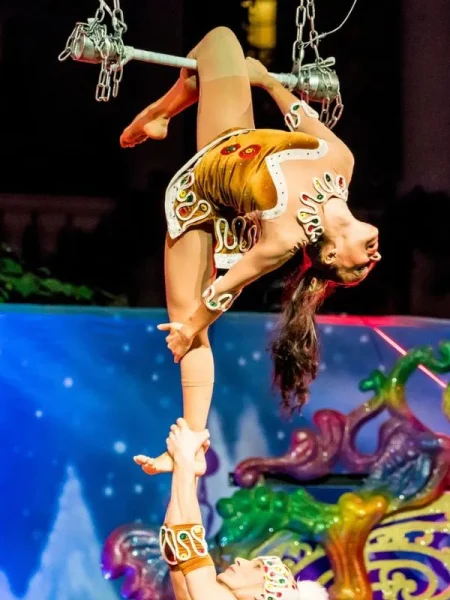

Static Trapeze vs. Swinging Trapeze
Static trapeze is fixed in place or can also be gently swinging. It’s great for learning foundational shapes, poses and transitions. You get to know the bar, your body and the relationship between them.
Swinging trapeze (not quite flying trapeze) moves in a pendulum motion. It’s more dynamic. Timing becomes everything. You work with the momentum instead of fighting against it.
Most beginner classes start with static trapeze. Once you’re comfortable, adding a bit of swing can feel like leveling up in a video game.
Trapeze Rigging: Your Invisible Safety Net
The rigging for trapeze isn’t often thought about, but it matters – a lot.
Rigging is how the trapeze is attached to a structure. It includes:
– Carabiners
– Swivels (if spinning is involved)
– Slings or spansets
– A secure ceiling point or outdoor rig
Studios typically take care of all this. They use tested hardware, rated for load-bearing safety and inspect the setup regularly. If you’re thinking about training at home? Let’s pause. Rigging isn’t a DIY project unless you’re a qualified professional or working with one. Check out Aerial Rigging 101 for more information.
Also… always use crash mats. Falling from even a few feet can be rough.
What Happens in a Trapeze Class?
You show up. You warm up. Then you touch the trapeze and realize it’s heavier than it looks. But within a few minutes, you’re already trying your first pose – and maybe hanging upside down. Yes, you.
A beginner aerial trapeze class usually includes:
Warm-up – Core activation, shoulders, grip work
Ground drills – Prepping your body for specific shapes or hangs
Trapeze time – Trying mounts, sits, hangs and poses
Cool down – Stretching and grounding
The pace is slow enough to keep you safe, but exciting enough that you leave feeling like you have just discovered a secret power.
Beginner Trapeze Moves
Here’s a peek at the kind of moves you might try in your first few sessions:
Knee Hang – Hook your knees over the bar and lean back. It’s basic, but it feels wild the first time.
Mermaid Sit – One leg in front, one behind, both arms holding the ropes. It’s stable and beautiful – perfect for photos.
Gazelle – A reclining pose across the bar with one leg hooked and the other extended. Sounds poetic? It looks that way too.
Bird’s Nest – You hold the bar behind your knees, arch backward and let your arms reach. It’s as dramatic as it sounds.
And don’t forget the mount – getting onto the bar in the first place. It can be awkward at first, especially if you’re short or unsure of your upper body strength. But it gets easier. Everyone struggles with the mount early on. Everyone.
Is Trapeze Safe? Does Trapeze Hurt?
These are both fair questions. Let’s tackle them.
Safety: Trapeze is relatively safe when taught correctly and rigged properly. Studios use thick crash mats, spotters and instructors who know what they’re doing. Accidents are rare – usually a result of ego or impatience more than anything else.
Pain? Yes, kind of. The bar is solid. Your body is soft. That combo means bruises, sore shoulders, pinched skin. But like any skill, your body adapts. You learn to move in a way that avoids the worst of it.
That said, the soreness you feel after a class? It’s that earned kind of ache. Like your body knows it did something epic.
What to Wear (and What to Avoid) When Doing Aerial Trapeze
You’ll want to be comfortable and protected – without extra fabric getting in your way.
Do Wear:
– Wear fitted leggings or shorts (nothing slippery)
– Wear a long, tight top that won’t ride up when you are upside down
– Avoid zippers or metal – those can snag the ropes or dig into your skin
Don’t Wear:
– Wear loose pants or short shorts
– Use hand lotion before class (you need grip!)
– Wear jewelry (trust me, it’ll catch on something)
Bring water. Maybe tape for your hands if you’re sensitive. And if you bruise easily, some arnica gel post-class doesn’t hurt either.
Why People Love Aerial Trapeze and Why You Might Too
Here’s the thing – trapeze makes you feel capable in a way that’s hard to explain.
You walk into your first class unsure. You walk out taller, stronger, prouder – even if you only managed one pose. The act of holding your body up, of hanging in mid-air and realizing you can, is weirdly powerful.
And it’s not just physical. Aerial trapeze teaches trust – mostly in yourself. You learn how your body moves, how to breathe through fear, how to try again when something doesn’t click the first (or fifth) time.
Trapeze is not always graceful. Sometimes it’s messy. But it’s real. And when you hit a pose just right or swing for the first time or nail a mount you’ve been struggling with? It’s magic.
If you’re still on the fence about whether or not to give trapeze a chance, remember this… you don’t have to be strong already. You’ll build the strength. You don’t need dance training or circus history or gymnast arms. All you need is a bit of nerve and a willingness to try. That’s it.
Trapeze meets you where you are. And then – quietly, consistently – it helps you fly higher than you thought you could.
So maybe give it a go. Bring your doubts. Bring your curiosity. Leave the ground – and see what happens!