
Aerial Hammock 101
Discover what aerial hammocks are, who they are for and why you might like to try them
Aerial Hammock
Let’s be honest: the first time you see someone hanging gracefully in mid-air, wrapped in fabric like a butterfly about to take flight, you probably think, “That’s either magic or madness.”
But here’s the thing – it’s neither.
It’s aerial hammock. And despite how jaw-dropping it looks, it is surprisingly beginner-friendly. You don’t need to be a dancer or gymnast. You don’t need to do a headstand on the mat to fly off it. You just need curiosity, a pinch of patience and maybe a willingness to wobble.
If you’ve ever wanted to feel strong, stretch deeply or just float for a few minutes without the chaos of gravity, you’re in the right place.
Let’s untangle the hammock – figuratively, of course.
What Exactly is an Aerial Hammock?
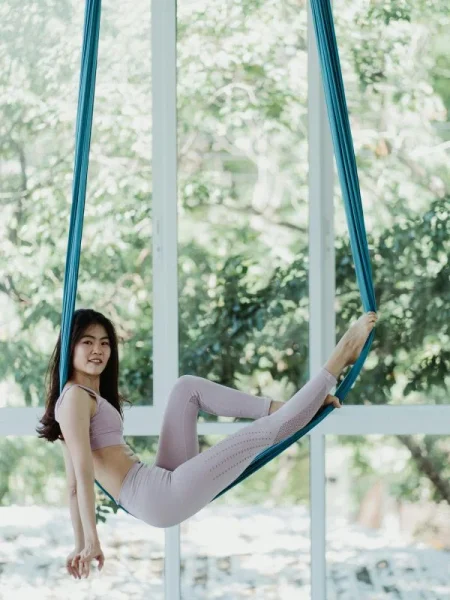
Here’s the basic idea: an aerial hammock is a long loop of silky fabric rigged from the ceiling, creating a low-hanging swing or cradle. Think of it like a cross between a yoga prop, a circus apparatus and a really fancy hug.
It’s used for:
– Stretching and support in yoga or mobility sessions
– Core and upper-body strength training
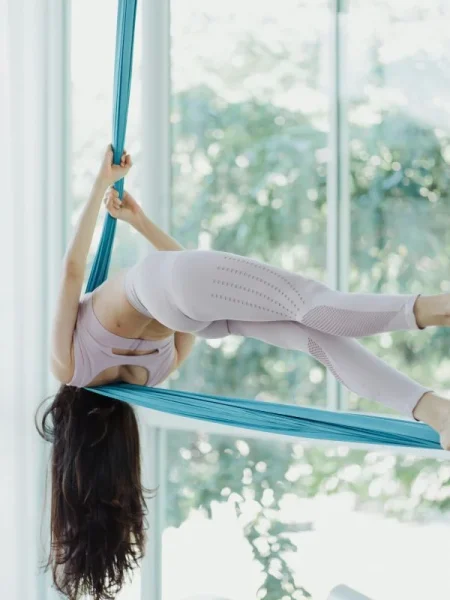
– Inversions (yep, hanging upside down – but it’s optional)
– Aerial dance or flow for creative movement
Depending on the class style, you might stay close to the ground or be floating several feet in the air. But don’t panic – beginners usually start low and instructors are great at reading nervous faces.
The vibe? Somewhere between workout and playground. And if that sounds like the best thing ever – well, it kind of is.
Aerial Hammock vs. Aerial Silks
Let’s clear up a common mix-up.
Aerial silks (or aerial tissue) are two separate fabric tails that hang to the floor. You climb them, wrap them and do dramatic drops and spins – think Cirque du Soleil. You can read more about aerial silks in Aerial Silks 101.
Aerial hammock, on the other hand, is one continuous loop, like a hammock (hence the name). It’s less about acrobatics and more about fluid movement, control and often, relaxation.
Silks require serious grip strength and height tolerance. Hammock offers a gentler entry point – though advanced flows can be just as spicy.
What is an Aerial Hammock Made From? Can It Hold Me?
You’ve got questions. We hear them all the time:
“Is that… safe?”
“Will an aerial hammock hold my weight?”
Short answer: Yes.
Aerial hammocks are typically made from nylon tricot – the same material used in aerial silks. It’s soft, slightly stretchy and incredibly strong. We’re talking 1,000 to 2,000+ lbs of load-bearing capacity (depending on the aerial rigging). More than enough for a person or two.
Studios use professional grade rigging equipment: carabiners, daisy chains, ceiling anchors. It’s not DIY. It’s engineered. You can learn more about aerial rigging at Aerial Rigging 101.
So no, the hammock isn’t going to snap. And yes, you are allowed to trust it.

What Actually Happens in an Aerial Hammock Class?
Great question – and no, it’s not just spinning in mid-air to flute music (though that’s not entirely off the table).
A typical beginner class might look like this:
1. Getting Set Up
You’ll adjust the hammock to hang around your hip height (or lower). The instructor will check everything before you start.
2. Warm-Up (Usually on the Mat)
Gentle movements, breathwork, light stretching. Ground first, then air.
3. Supported Poses
You’ll learn how to sit, stand, lie back and gently stretch with the fabric. Think reclining cobbler pose with support or a downward dog where your hips float off the ground.
4. Conditioning & Strength
Core work while suspended. Arm and shoulder exercises. Maybe planks or pull-ups (with fabric support).
5. Inversions (Optional)
Hanging upside down, supported by the hammock – decompresses the spine, builds trust and honestly just feels amazing.
6. Cool Down / Floating Savasana
You lie in the hammock like it’s a silk cocoon, eyes closed, gently swaying. A lullaby for grown-ups.
You might laugh, wobble or get tangled once or twice. That’s normal. Everyone’s been the new person in the hammock at some point.
Is It a Workout? A Stretch? A Meditation?
All of the above – depending on the style.
– Aerial yoga uses the hammock to support traditional yoga poses
– Aerial conditioning focuses on strength, grip and form
– Aerial dance/flow is more about choreography and artistic movement
– Restorative aerial slows it all down with long, passive stretches
Some classes feel like a creative gym session. Others feel like a nap. You’ll figure out what your body enjoys.
Who Is Aerial Hammock For? (Spoiler: Probably You)
Let’s bust a few myths.
“I’m not flexible.”
Perfect. The aerial hammock helps with that.
“I can’t do pull-ups.”
Neither could most people in their first class.
“I’m scared I’ll look silly.”
You might. So what? Everyone does. Then everyone gets over it.
Aerial hammock welcomes all body types, ages and experience levels. Whether you’re a dancer, a desk worker or a stressed-out student – you belong.
And if you’ve been feeling disconnected from your body lately? The hammock is a surprisingly gentle way to rebuild that relationship.
What Should I Wear While Doing Aerial Hammock?
Simple is smart.
– Fitted clothing: Loose stuff bunches and gets caught.
– Coverage: Long leggings, sleeves and no exposed midriffs (fabric burn is real).
– No zippers or buttons: They tear fabric and poke you.
– Barefoot or grippy socks: Your choice.
And skip the lotion. Trust us. Slippery legs in a hammock? Nope.
Common Fears (And Why You Can Ignore Most of Them)
Let’s tackle the inner monologue:
“I’ll fall.”
You’re low to the ground. And the hammock wraps, supports and holds you. Plus, there are mats.
“I’ll get dizzy.”
It can happen, especially during spins or inversions. Just pause. Drink water. Rejoin when you’re ready.
“I’ll be the only beginner.”
Doubt it. Even if you are, instructors know how to tailor the pace and make you feel at home.
“I don’t want to go upside down.”
You don’t have to. Everything is optional. You’ll build up to it – if and when you feel like it.
Let’s Talk About Aerial Hammock Safety
Any aerial activity involves some risk. But it’s manageable when you follow the basics:
– Take classes from certified instructors
– Use properly rigged, weight-rated equipment
– Never rush into advanced tricks
– Listen to your body – especially with neck, spine or balance issues
If you’re recovering from injury or have specific medical conditions (like glaucoma, vertigo, or pregnancy), talk to your instructor and doctor first.
Aerial Hammock and Rigging
If you ever want to practice aerial hammock at home, rigging becomes a big deal.
You can’t just throw an aerial hammock over a tree branch or ceiling hook and hope for the best. You need:
– Load-bearing beams or joists
– Proper hardware (anchors, carabiners, daisy chains)
– Weight testing and installation help (by a professional)
Freestanding aerial rigs are also available – these are portable, adjustable and often easier for home use. Brands like Uplift Active or Aerial Essentials make starter kits.
But until you’re confident with wraps, exits and strength, it is best to stick with the studio.
Is Aerial Hammock Expensive?
Not necessarily.
– Drop-in classes: $20–$40 depending on your city
– Intro packs: Often cheaper per class
– Aerial Hammocks: $80–$200 for quality fabric + rigging
– Home rig: $300–$800 if you go all in
You don’t need gear at first. Studios provide everything. Once you’re hooked, you can slowly build your setup.
Should You Try Aerial Hammock?
Maybe your feet are tired. Maybe your spine’s compressed from sitting all day. Maybe your mind just needs to switch off for a while.
Aerial hammock won’t solve everything. But it might help you breathe a little easier, laugh a little more and see your body as something capable – not just critical.
There’s power in being held. In hanging upside-down and realizing… you’re fine. Supported. Grounded even when you’re floating.
So should you try it?
If you’re even thinking about it – yeah. You should.
Take the class. Hang awkwardly. Smile mid-air. And when you’re lying in that fabric cocoon, swaying gently at the end of class, try not to fall asleep. But if you do – honestly, no one’s judging.